



Introduction to Sustainable Development: Understanding People, Planet, Prosperity and Governance
Author: Dr. Sonia Mushtaq
Focus Keyword: Introduction to Sustainable Development
Secondary Keywords: What is sustainable development, sustainable development meaning, sustainable development goals, economic social environmental sustainability, sustainable development explained
Meta Title:
Introduction to Sustainable Development: A Complete Guide
Introduction to Sustainable Development
What does it mean for a society to develop?
For much of modern history, development was often associated with economic growth—higher incomes, more production, better infrastructure, and greater consumption. Economic growth remains important, but the challenges facing societies today have made it clear that development cannot be measured by economic performance alone.
A country can become wealthier while inequality increases. A city can build modern infrastructure while millions of people lack affordable housing or clean water. A company can increase its profits while degrading ecosystems or exhausting its workforce.
This is where sustainable development becomes important.
Sustainable development asks a broader question:
How can we create prosperity today while ensuring that people, communities, economies, and the natural environment can continue to thrive in the future?
It is not simply about protecting the environment. It is about understanding the complex relationship between economic prosperity, social wellbeing, environmental protection, institutions, and human behavior.
Meta Description:
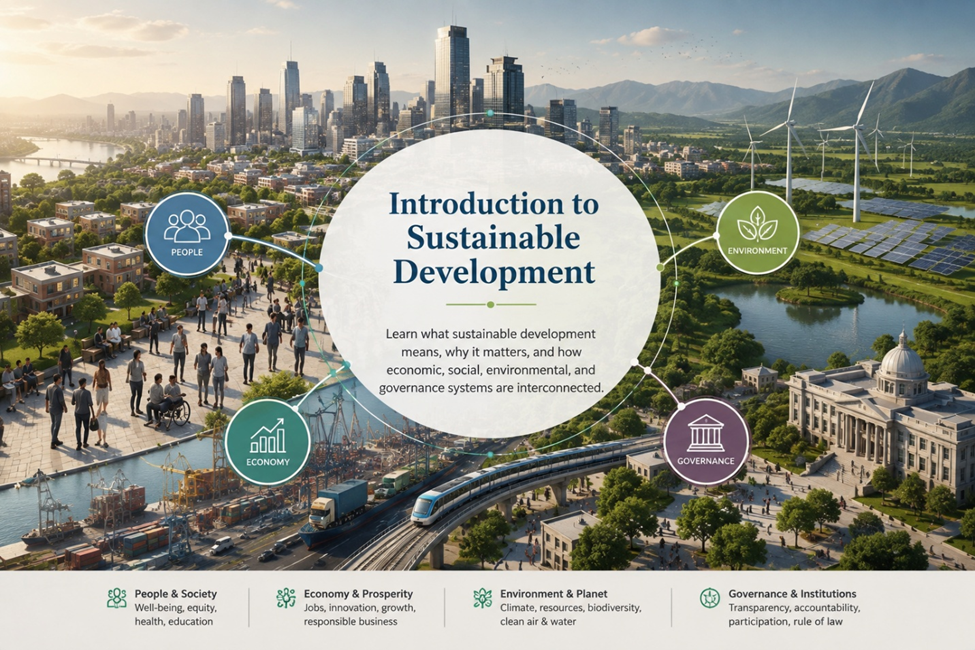
Learn what sustainable development means, why it matters, and how economic, social, environmental, and governance systems are interconnected.
What Is Sustainable Development?
The widely used definition comes from the 1987 Brundtland Report, which described sustainable development as development that meets the needs of the present without compromising the ability of future generations to meet their own needs.
At its core, sustainable development is about long-term thinking.
It asks organizations, governments, communities, and individuals to consider not only:
“What benefits can we create today?”
but also:
“What consequences will our decisions have tomorrow?”
This makes sustainable development both an analytical approach and a vision for a better society.
Sustainable Development Is More Than Environmental Protection
One of the most common misunderstandings is that sustainable development simply means protecting forests, reducing carbon emissions, or using renewable energy.
These are important, but they represent only part of the picture.
Imagine a city that builds an extensive electric public transportation system. From an environmental perspective, this may help reduce dependence on fossil fuels.
But sustainable development requires us to ask additional questions:
- Can low-income citizens afford to use it?
- Does it connect poorer communities with employment opportunities?
- Is the electricity itself generated sustainably?
- Are workers treated fairly?
- Is the system accessible to people with disabilities?
- Is the infrastructure resilient to climate-related risks?
- Is the project governed transparently?
- Can the city afford to maintain it over the long term?
These questions demonstrate why sustainable development requires a holistic perspective.
The Four Interconnected Dimensions of Sustainable Development
Sustainable development involves several interconnected systems. For practical understanding, we can examine four broad dimensions:
- Economic
Economic sustainability concerns the ability to create prosperity, employment, productivity, innovation, and livelihoods over the long term.
A sustainable economy should not depend on practices that generate short-term profits while creating unsustainable debt, resource depletion, inequality, or environmental damage.
- Social
Social sustainability focuses on people’s wellbeing and the quality of communities.
It includes issues such as:
- Poverty reduction
- Education
- Healthcare
- Gender equality
- Decent work
- Social inclusion
- Human rights
- Community wellbeing
Economic prosperity becomes meaningful when its benefits are broadly shared.
- Environmental
Environmental sustainability recognizes that economic and social systems operate within the limits of the natural environment.
It includes:
- Climate action
- Biodiversity protection
- Sustainable use of natural resources
- Clean air and water
- Waste reduction
- Renewable energy
- Ecosystem protection
The economy ultimately depends on functioning ecological systems.
- Governance and Institutions
Sustainable development also depends on how societies are governed.
Effective institutions require:
- Transparency
- Accountability
- Rule of law
- Participation
- Fairness
- Responsible decision-making
Without effective governance, even well-designed sustainability policies can fail during implementation.
Why These Dimensions Cannot Be Considered Separately
The real challenge of sustainable development is that these dimensions are interconnected.
Consider the transition from petrol and diesel vehicles to electric mobility.
At first glance, it appears to be an environmental issue.
But look deeper.
Electric vehicles require minerals and batteries, creating economic and environmental questions. Manufacturing creates jobs, creating social implications. Electricity generation determines the environmental benefits. Charging infrastructure requires investment and planning. Mining raises questions about labor rights and local communities. Government policies determine incentives, standards, and regulation.
One decision therefore affects multiple systems.
This interconnectedness is one of the most important ideas in sustainable development.
A Contemporary Example: The Energy Transition
The global transition toward renewable energy provides another useful example.
Solar and wind energy can help reduce dependence on fossil fuels and lower greenhouse gas emissions. At the same time, the transition creates new industries, employment opportunities, and technological innovation.
But it also creates challenges.
Countries need to consider:
- Where will critical minerals come from?
- How will workers in declining fossil-fuel industries be supported?
- Will clean energy be affordable?
- Can electricity grids handle growing renewable capacity?
- How will local communities be affected by new infrastructure?
- How can supply chains remain ethical and resilient?
This is why we increasingly talk about a just transition—a transition toward a low-carbon economy that also considers workers, communities, affordability, and social equity.
Technology Can Help—but Technology Alone Is Not Sustainability
Technology is one of the most powerful tools available for sustainable development.
Electric vehicles, renewable energy, artificial intelligence, smart cities, precision agriculture, energy-efficient buildings, and advanced public transportation can all contribute to sustainability.
But technology itself is not automatically sustainable.
A technologically advanced solution may still create environmental or social problems if:
- It consumes excessive resources.
- It is inaccessible to poorer communities.
- Its supply chain involves exploitation.
- It creates significant waste.
- It requires unsustainable amounts of energy.
- Its benefits are concentrated among a small group.
Therefore, the question should not simply be:
“Is this technology advanced?”
The better question is:
“Does this technology create long-term value for people, the economy, and the environment?”
From Shanghai to Karachi: Why Context Matters
Consider two very different urban realities.
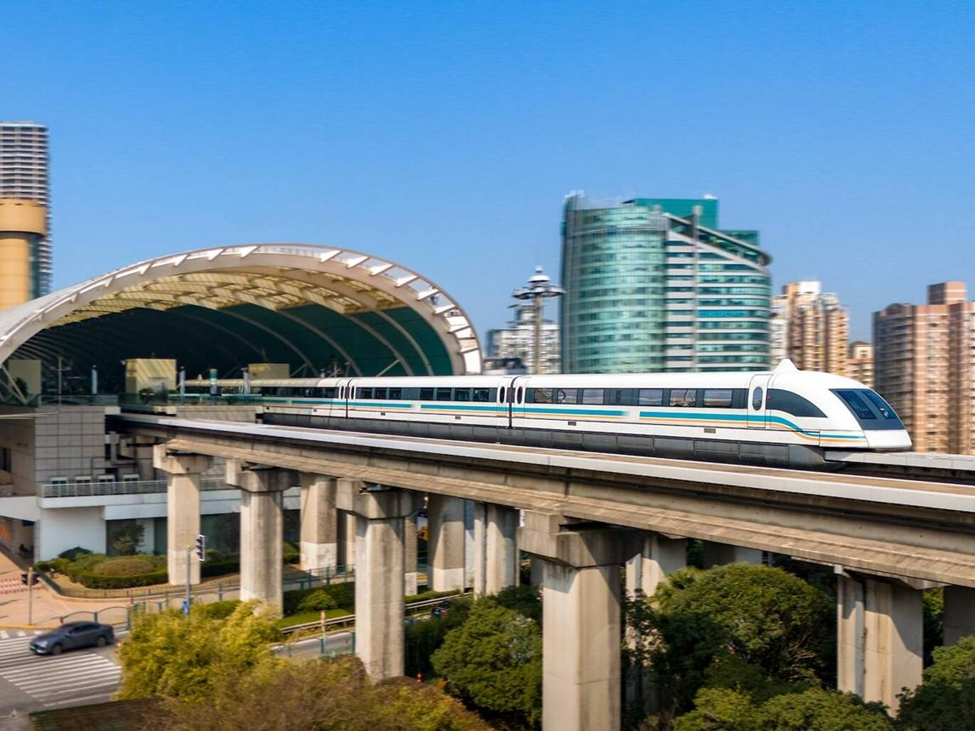
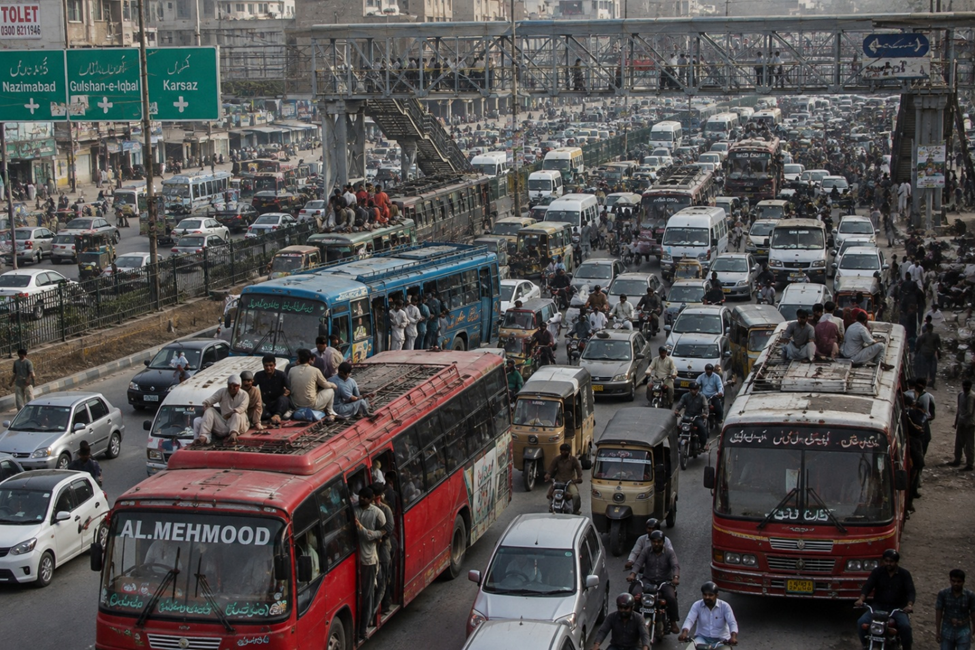
From Shanghai to Karachi: Why Context Matters
Consider two very different urban experiences.
Shanghai demonstrates what advanced infrastructure and technology can achieve. High-speed rail and electric transportation illustrate how investment in modern mobility can improve connectivity and potentially support lower-carbon transportation.
Karachi presents a very different dimension of the sustainable development challenge. As a major economic and commercial center, the city faces the complex consequences of rapid urban growth, transportation demands, infrastructure pressures, water challenges, waste management, and environmental concerns.
Yet Karachi also demonstrates why sustainable development cannot simply be understood as adopting the newest or most advanced technology. Solutions must respond to the realities of the communities they serve.
A high-speed transportation system may be appropriate in one context, while improving public transportation, water infrastructure, waste management, energy access, housing, or climate resilience may be more urgent priorities in another.
The important lesson is that sustainable development does not have one universal solution.
What works in a technologically advanced city such as Shanghai may not be directly transferable to a rapidly growing city such as Karachi. Sustainable solutions must consider economic conditions, social needs, environmental constraints, infrastructure, institutional capacity, and the realities of local communities.
The question, therefore, is not simply:
“How technologically advanced is a city?”
Rather:
“Does the development approach improve people’s lives, support economic opportunity, protect the environment, and remain viable for future generations?”
That is the essence of sustainable development.
Sustainable Development and the Triple Bottom Line
A useful way to understand sustainable development in organizations is through the Triple Bottom Line.
It considers three interconnected dimensions:
People
How does an organization affect employees, customers, communities, and society?
Planet
How does the organization affect natural resources, ecosystems, climate, and the environment?
Prosperity
Can the organization create economic value and remain financially viable over the long term?
This perspective moves organizations away from thinking exclusively about short-term financial performance.
It encourages businesses to consider whether their success is economically viable, socially responsible, and environmentally sustainable.
For businesses, this connects directly with Sustainable Business Practices and Sustainable Human Resource Management (Sustainable HRM).
What Do the Sustainable Development Goals Have to Do With It?
The global commitment to sustainable development was strengthened through the United Nations Sustainable Development Goals (SDGs), adopted in 2015.
The SDGs provide 17 interconnected goals addressing issues ranging from poverty and hunger to quality education, gender equality, clean energy, decent work, climate action, responsible consumption, peace, and strong institutions.
They provide organizations, governments, universities, and civil society with a common language for discussing sustainability.
However, the SDGs should not be treated as 17 completely separate objectives.
They are interconnected.
For example:
Quality Education → Skills → Decent Work → Economic Opportunity → Reduced Inequality
Similarly:
Clean Energy → Lower Emissions → Climate Action → Healthier Communities
Understanding these connections is essential for meaningful sustainability strategies.
Sustainable Development in Business
Sustainable development is increasingly changing how businesses think about strategy.
Companies are being asked to consider questions such as:
- How sustainable are our supply chains?
- How do we reduce greenhouse gas emissions?
- How do we treat our employees?
- Are our products contributing to responsible consumption?
- How do we manage natural resources?
- Are our business practices ethical?
- How resilient is our organization?
- How do we create long-term value for stakeholders?
This is where Sustainable Business Practices become important.
Sustainability is no longer simply an environmental department’s responsibility. It increasingly involves strategy, finance, operations, marketing, supply chains, and Human Resource Management.
The Role of HR in Sustainable Development
People are at the center of every organization.
A company may have a sustainability strategy, but employees are the ones who implement it.
This makes Sustainable HRM particularly important.
Through ability-enhancing HR activities, organizations can develop employees’ sustainability knowledge and skills.
Through motivation-enhancing HR activities, organizations can encourage employees to engage in sustainable behaviors.
Through opportunity-enhancing HR activities, organizations can give employees the autonomy and participation needed to contribute sustainability ideas and initiatives.
For example, HR can contribute to environmental sustainability through:
- Green training
- Sustainable recruitment
- Sustainable performance management
- Green employee engagement
- Sustainable commuting policies
- Employee participation in environmental initiatives
At the same time, HR contributes to social sustainability through employee wellbeing, inclusion, decent work, development, and fair employment practices.
This demonstrates that Sustainable HRM connects people management directly with sustainable development.
Why Sustainable Development Matters Now
Sustainable development has become particularly important because today’s challenges are increasingly interconnected.
Climate change affects agriculture.
Agriculture affects food security.
Food security affects poverty and health.
Poverty affects education and employment.
Employment affects economic development.
Economic development influences resource consumption.
And governance influences how effectively societies respond to all of these challenges.
There is no single isolated problem.
There is a system of interconnected problems.
That is why sustainable development requires systems thinking rather than isolated solutions.
The Central Question of Sustainable Development
Ultimately, sustainable development asks us to rethink what we mean by progress.
Is progress simply producing more?
Is a successful economy one with the highest GDP?
Is a successful company one with the highest profit?
Is a modern city one with the most advanced technology?
Sustainable development encourages us to look beyond these measures.
A truly sustainable society should strive to be:
Prosperous — creating economic opportunities and decent livelihoods.
Inclusive — ensuring that prosperity is broadly shared.
Environmentally responsible — protecting the natural systems upon which life and economies depend.
Well governed — supported by transparent, accountable, and effective institutions.
This is the broader vision of sustainable development.
Final Thoughts
Sustainable development is not a single policy, technology, or environmental initiative. It is a way of thinking about development and the future.
It requires us to understand the connections between the economy, society, environment, technology, institutions, and human behavior and then use that understanding to make better decisions.
The central challenge is finding ways to create prosperity without creating unacceptable social inequality or exceeding the ecological limits of our planet.
For businesses, this means sustainability must move beyond isolated projects and become part of strategy, operations, leadership, and people management.
And for HR professionals, it means recognizing that people are not only recipients of sustainability strategies they are among the most important drivers of them.
This is where our exploration of sustainable development begins.